
Pipeline Safety Summit
Third-party activity, construction, and changing land use are pushing external interference to the top of the pipeline risk list.
The Pipeline Safety Summit brings operators, regulators, and industry experts together to compare how leading damage prevention programs are evolving: from monitoring coverage to ROW prioritization to field response.
Rising External Risk Is Redefining Damage Prevention
As activity around pipeline corridors increases, operators face growing pressure to monitor rights-of-way more effectively and respond to external threats with greater speed and consistency. While integrity programs have matured, external threats remain one of the leading causes of pipeline incidents.
Expanding External Risk
Third-party activity, construction, and changing land use are increasing along pipeline corridors, making external interference one of the leading causes of incidents.
The Monitoring Trade-Off
As coverage expands, operators must balance inspection frequency, network scale, and operational capacity without losing focus on the highest-risk areas.
Visibility Gaps Along the ROW
Airspace restrictions, weather, and access limitations make it difficult to maintain consistent visibility, leading to blind spots in monitoring programs.
From Detection to Action
Identifying risks is only part of the challenge. Ensuring timely, consistent, and defensible response across large networks remains a key operational gap.

%20(5).avif)

A Working Session on Pipeline Safety and Damage Prevention
This half-day virtual event is designed to explore how damage prevention programs are evolving in practice. Through strategic keynotes, expert sessions, and real-world case studies, attendees will gain clarity on how to scale monitoring, prioritize risk, and strengthen response across complex pipeline networks.
Meet the Speakers
Our speakers represent a broad cross-section of the pipeline ecosystem, including operators, regulators, and industry associations. Their combined experience offers a unique perspective on how damage prevention is evolving, and what it takes to build more effective, defensible programs.


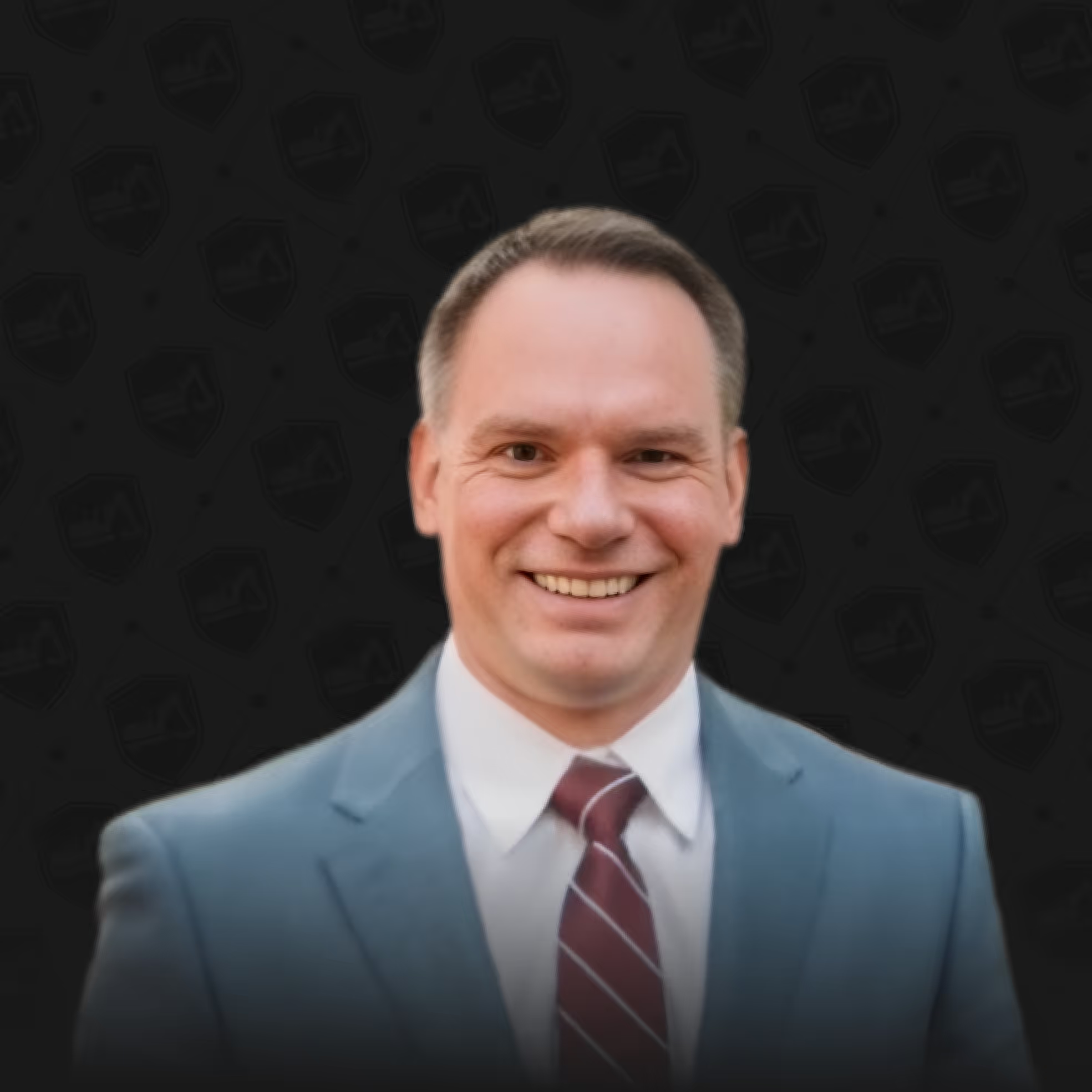

His expertise spans contract negotiation, claims management, contract administration, and governance, with a strong track record of supporting commercial performance and regulatory compliance. Manesh also brings experience in board-level reporting and in delivering training that drives continuous improvement across legal and commercial teams.

With an academic background in geography and natural hazards from Coventry University, Chelsea combines technical GIS expertise with practical insight to support effective land and infrastructure management.


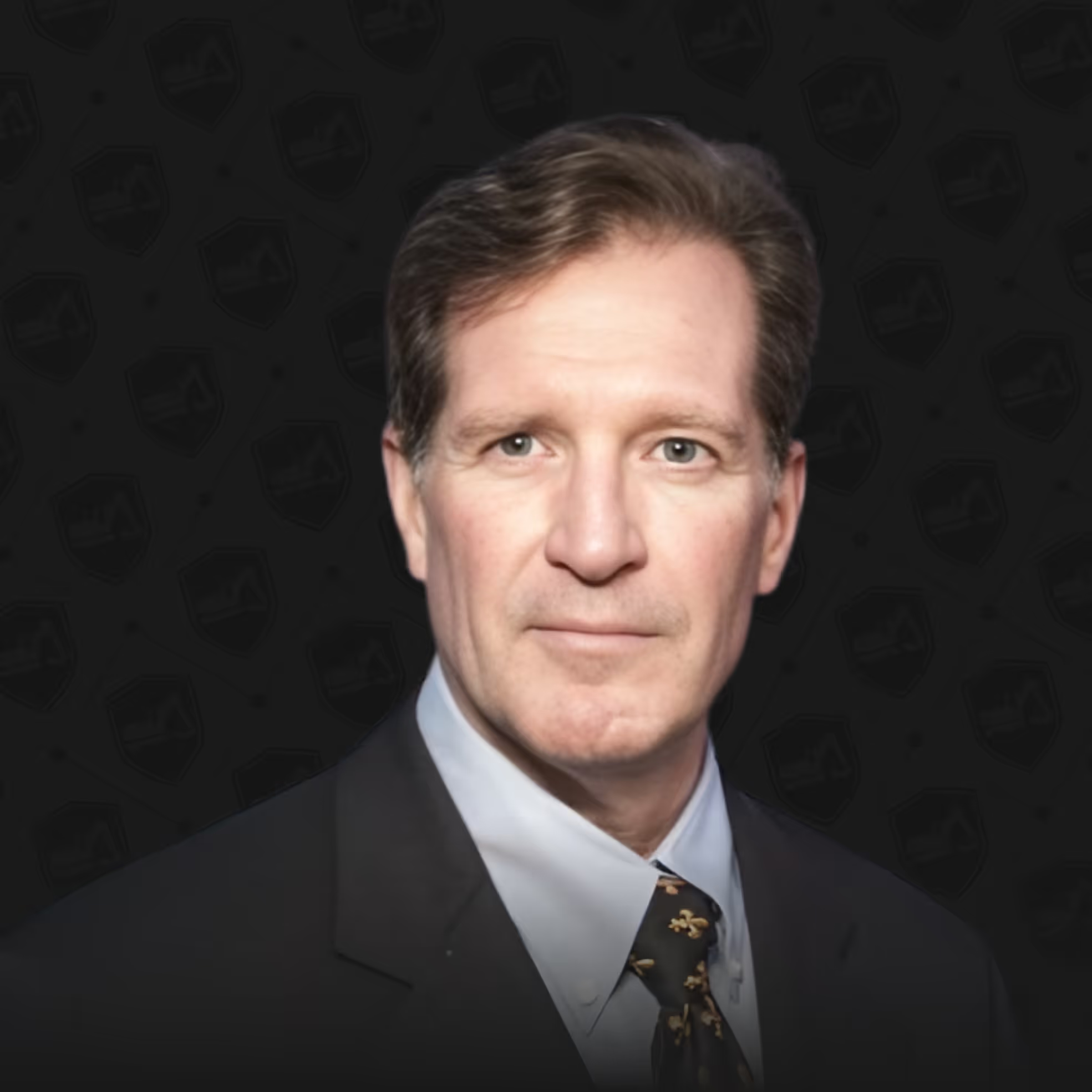
Previously, Bill served the Deschutes River Conservancy, a multi-stakeholder nonprofit focused on restoring streamflow and water quality in Oregon's Deschutes River Basin.
Bill holds a BS in Business Administration from the University of Delaware and the Chartered Financial Analyst designation from the CFA Institute.
.avif)
.avif)
Half a Day, Four Sessions, One Focus:
Damage Prevention That Scales
04:00 – 04:15 PM CEST
Nick Ferguson, Chief Evangelist, LiveEO
Nick Ferguson will open the summit by setting the context for the day, outlining how external risk is evolving across pipeline networks and why damage prevention must adapt. He will introduce the key themes shaping the sessions ahead, from scaling monitoring to strengthening response.
Bill Caram, Executive Director, Pipeline Safety Trust
As external threats along pipeline corridors continue to grow, operators face increasing pressure to strengthen safety and prevention efforts. This keynote will explore how the risk landscape is evolving, what challenges operators face in managing third-party interference at scale, and how regulation and industry collaboration are shaping the future of pipeline safety.
04:15 – 04:45 PM CEST
04:45 – 05:30 PM CEST
Shannon Neufeld, Technical Leader, Canada Energy Regulator
Terry McGill, Former President, Enbridge
Scaling damage prevention across large, complex networks requires more than expanding coverage. In this session, speakers will share how operators structure monitoring programs, balance assumed vs. data-driven risk, and make strategic trade-offs as visibility expands. Expect candid lessons on building programs that remain effective as scale increases.
Manesh Patel, Head of Joint Venture and Land Management, British Pipeline Agency
Chelsea Dove, GIS Coordinator, British Pipeline Agency
Shane Mattix, Technical Product Manager, Irth Solutions
Too little visibility means missed risks. Too much creates noise and slows response. This session explores how operators and industry stakeholders balance this trade-off in practice, where monitoring falls short, where it overwhelms, and how approaches are evolving to improve coverage, prioritization, and response, particularly in the context of third-party activity.
05:30 – 06:15 PM CEST
06:15 – 07:00 PM CEST
Andrew Sheldon, Director, Pipeline Integrity, ROW & Threat Management, TC Energy
Dane Lobb, Supervisor, Damage Prevention & Public Awareness, PG&E
Damage prevention is entering a more predictive era, with operators beginning to harness data to get ahead of risk rather than simply respond to it. This session examines how operators are identifying threats before they materialize and building anticipatory approaches into existing programs. Andrew Sheldon will draw on TC Energy's experience to explore what a data-driven damage prevention strategy looks like in practice, the integration challenges operators face along the way, and the lessons learned from moving beyond conventional monitoring.
Nick Ferguson, Chief Evangelist, LiveEO
Ryan Williams, Solution Engineer, LiveEO
The summit will conclude with a recap of the day’s key themes, from scaling monitoring to strengthening response across the ROW. The session will also include a short SurfaceScout demo, showing how operators can improve visibility, support earlier threat detection, and strengthen damage prevention workflows.
07:00 – 07:30 PM CEST

What You’ll Take Away
Whether your organization is expanding monitoring coverage, refining response workflows, or looking to make better use of ROW data, this summit will provide practical perspective on how pipeline operators are strengthening damage prevention in a more complex risk environment.
How to Scale Monitoring
You will learn how operators structure monitoring across complex networks while keeping focus on the highest-risk areas.
How to Prioritize What Matters Most
You will understand how teams assess external threats, segment risk across the right-of-way, and make defensible decisions about where attention and resources should go first.
How to Close the Gap Between Insight and Action
You will explore what it takes to translate monitoring findings into consistent, aligned, and trackable response across the organization.
How Data Is Shaping the Next Phase of Damage Prevention
You will see how operators are beginning to use data not just to monitor current conditions, but to anticipate risk and support more proactive decision-making.
Be Part of the Pipeline Safety Conversation
Connect with pipeline operators, regulators, and industry experts addressing the realities of damage prevention today. Register to attend live or receive the full recording.
FAQs
Still have questions about the Pipeline Safety Summit? Check our FAQ section.


What is the Pipeline Safety Summit?
The Pipeline Safety Summit is a virtual event focused on how operators are strengthening damage prevention programs in response to growing external risk. It brings together pipeline operators, regulators, and industry experts to share practical approaches to monitoring, risk prioritization, and response.
Who should attend?
This event is designed for pipeline professionals involved in damage prevention and ROW management, including pipeline integrity managers, operations leaders, asset managers, and anyone responsible for monitoring and mitigating external risk.
How do I join the event?
After registering, you will receive a confirmation email with your access link and instructions to join the live sessions.
Is the summit interactive?
Yes. This is a live, interactive event where attendees can submit questions and engage with speakers throughout the sessions. You’ll have the opportunity to raise specific challenges and hear directly from industry experts and peers.
Is there a cost to attend?
No, the summit is free to attend.
Will the summit recording be available afterward?
Yes. If you register, you will receive access to the full recording after the event, even if you’re unable to join live.